Ns3 Projects
custom mobility NS3 projects
We do support custom mobility NS3 projects
In NS-3 simulation, Custom Mobility NS3 Projects are crucial for representing the movement of nodes within a network. These models define node trajectories and influence performance metrics such as network connectivity, packet delivery ratio, and throughput. NS-3 offers a variety of mobility models, ranging from basic to sophisticated, to cater to different simulation requirements.
Types of Mobility Models
Mobility models can be broadly categorized into two main types:
1. Deterministic Mobility Models
These models follow predefined patterns or algorithms, where node movement is predetermined. Examples include:
- Random Waypoint (RWP): Nodes move randomly between waypoints, combining stationary and mobile phases.
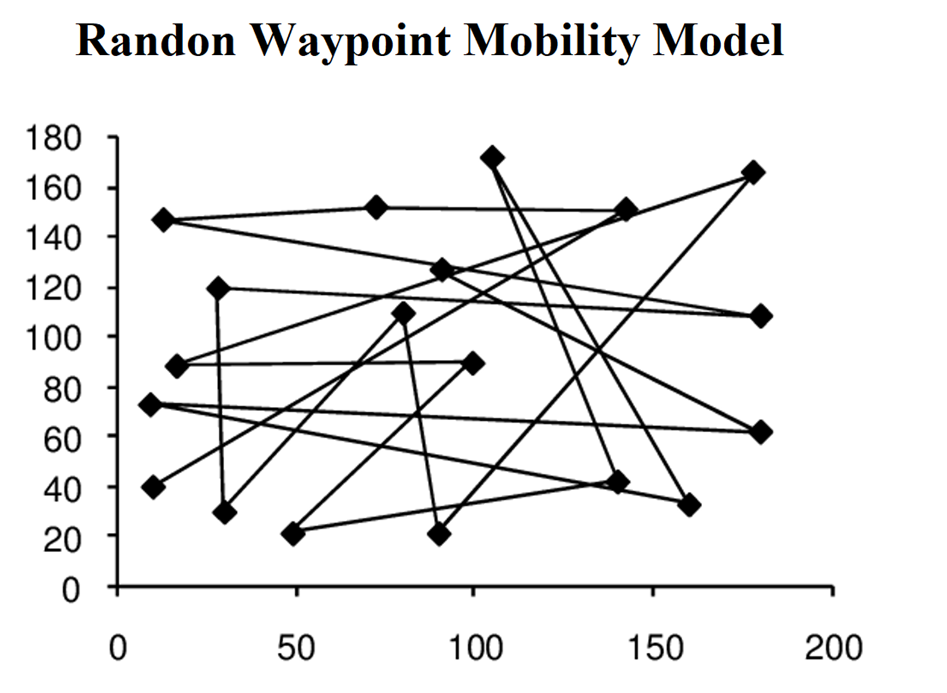
Random Waypoint Mobility Model
- Random Walk Model (RWM): Nodes move in random directions and speeds, simulating Brownian motion.
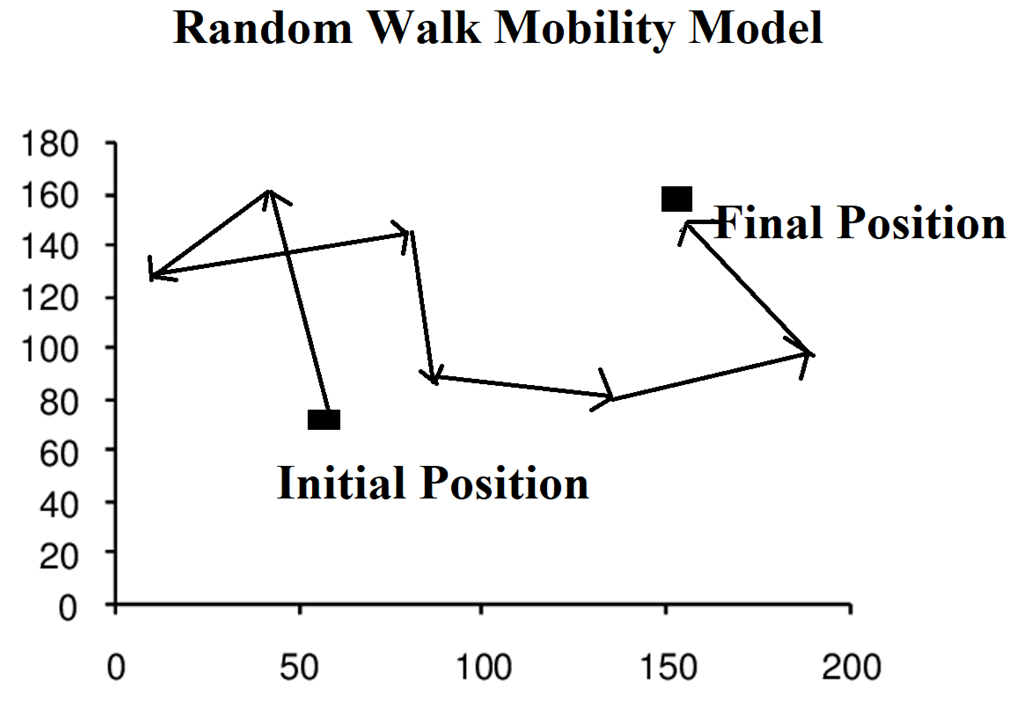
Random Walk Model (RWM)
- Constant Speed Model: Nodes move at a constant speed in a straight line, suitable for highway or satellite simulations.
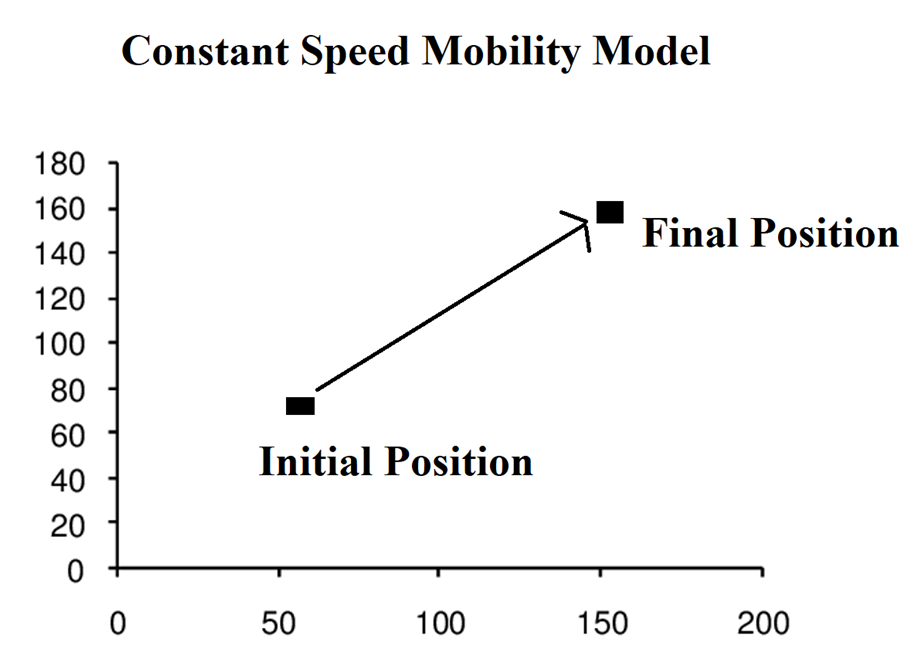
Constant Speed Model
2. Stochastic Mobility Models
These models introduce randomness in node movement for more realistic behavior. Examples include:
- Pathloss-Based Mobility Model (PBMM): Node movements are guided by wireless signal pathloss, reflecting terrain and obstacles.
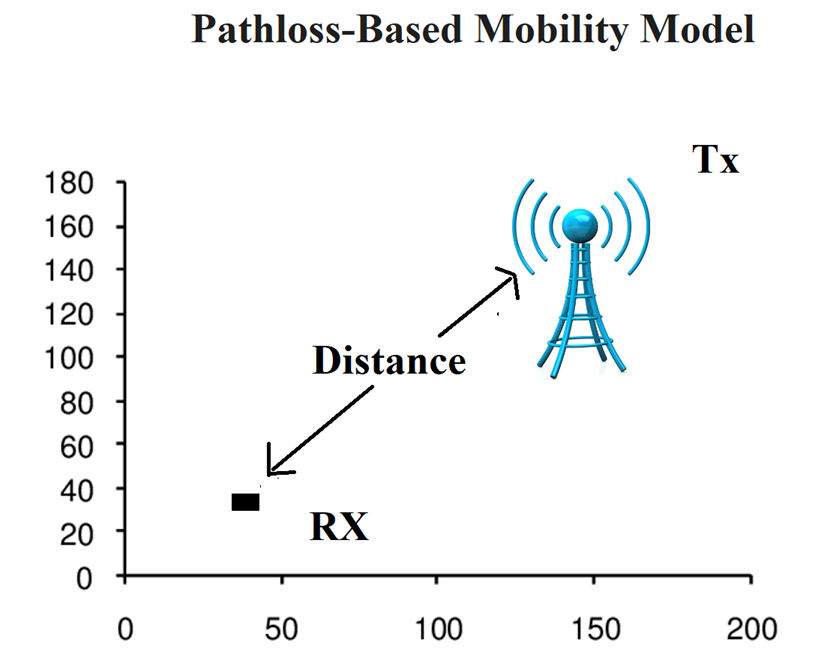
Pathloss-Based Mobility Model (PBMM)
- Gauss-Markov Mobility Model (GMM): Node movements combine randomness and persistence, similar to human walking patterns.
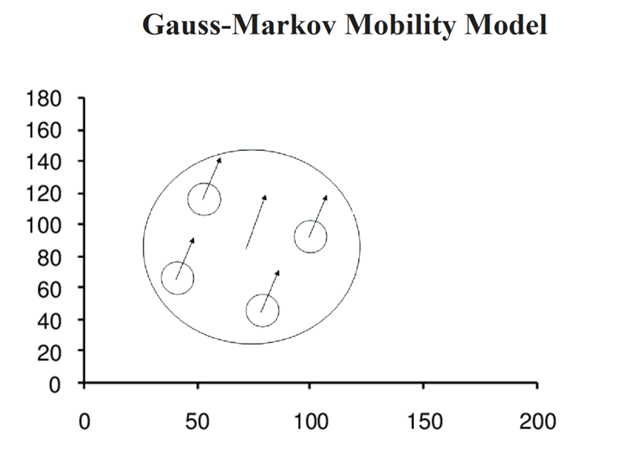
Gauss-Markov Mobility Model (GMM)
- First-Order Markov Mobility Model (FOMM): Node movement depends on its previous state, maintaining direction or speed trends.
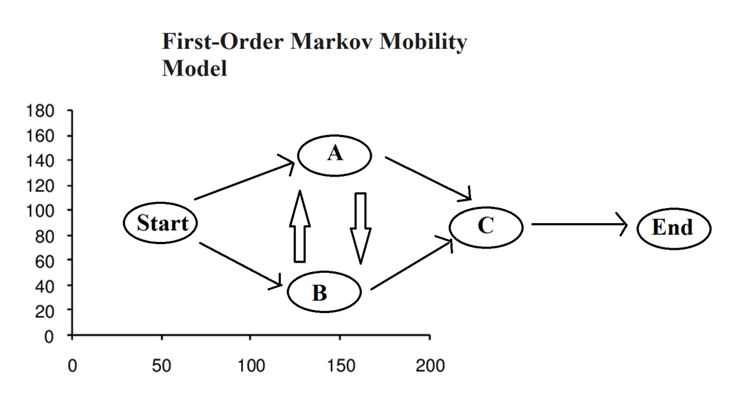
First-Order Markov Mobility Model (FOMM)
Selecting an Appropriate Mobility Model
The choice of model depends on the scenario being simulated. Consider:
- Type of network: Wireless sensor networks, ad hoc networks, and cellular networks have distinct mobility characteristics.
- Node density: Densely populated or high-traffic areas require models handling frequent interactions and collisions.
- Desired realism: Realistic models increase complexity and computational cost but provide accurate behavior representation.
Implementation of Custom Mobility NS3 Projects
- Define movement patterns: Set parameters such as speed range, direction selection, and acceleration limits.
- Handle node interactions: Implement collision avoidance and update node positions accordingly.
- Integrate with NS-3 simulation: Assign the mobility model to specific nodes or node groups.
Applications of Enhanced Custom Mobility NS3 Projects
- Network connectivity and packet delivery: Study how mobility affects message propagation and reliability.
- Throughput and resource utilization: Evaluate mobility impact on network capacity and resources.
- Protocol performance: Assess routing and congestion control efficiency under dynamic mobility.
- Network resilience: Analyze robustness against disruptions caused by mobility changes.
Conclusion
Custom Mobility NS3 Projects are fundamental in NS-3 simulations, enabling realistic evaluation of mobile networks. NS-3’s built-in mobility models, along with its flexibility for custom extensions, provide a powerful tool to explore network performance under varied mobility scenarios.